What Is Ultra Thin Edge Covelight?
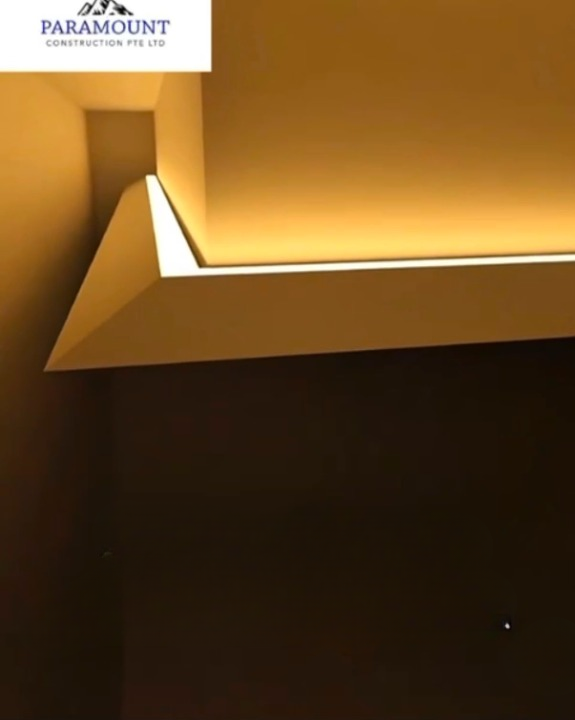
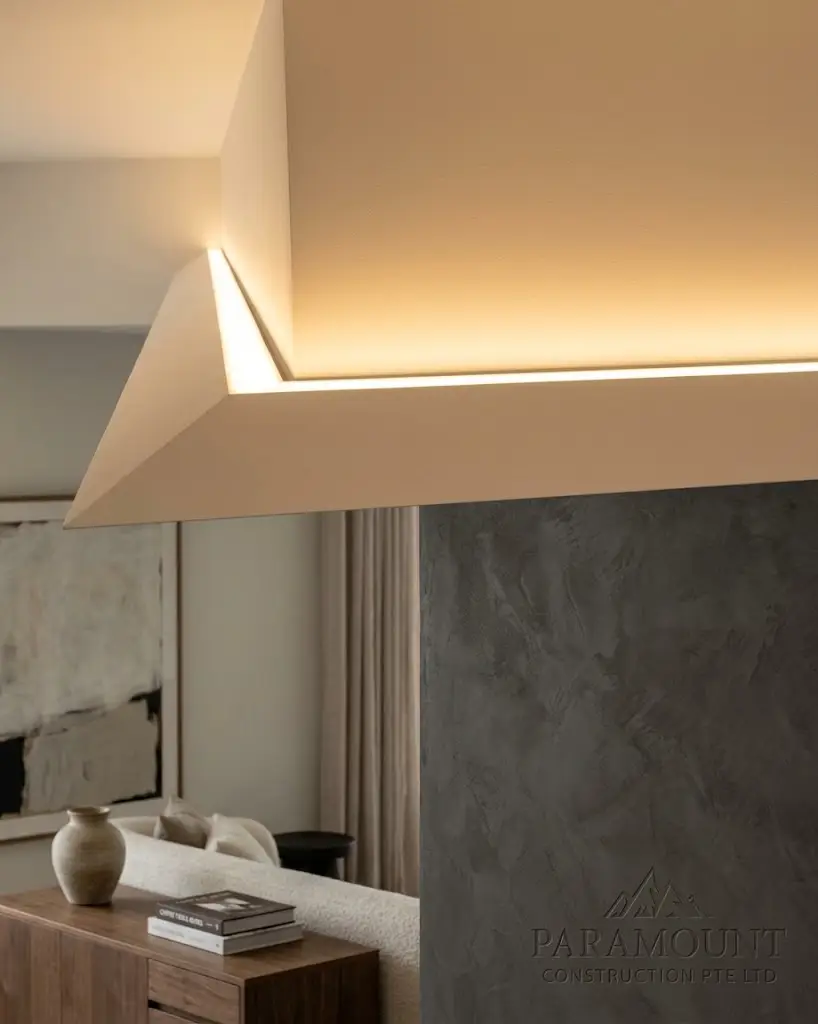
Ultra Thin Edge Covelight is an aluminium lighting profile that integrates with a false ceiling to create a fine edge and indirect LED illumination. Paramount’s profile features a 1mm edge and a 23° sloped detail, offering an alternative to the flat ledge of a traditional open cove.
However, standard false ceiling coves come with a well-known downside: dust, insects, and difficult maintenance.
When planning a renovation, evaluating how a design handles dust accumulation is just as crucial as its visual appeal. For BTO flats and condominiums in Singapore, ultra-thin cove lighting offers a subtle ceiling detail with soft, indirect illumination. When choosing a design, consider cleaning access and future LED servicing alongside its appearance.

The Problem with Traditional Open Cove Ledges
Conventional open cove ceilings rely on a flat, horizontal ledge to hide the LED strips. While effective at concealing the light source, this design creates a horizontal dust trap near your ceiling.
Dust & Cobweb Accumulation: The flat horizontal trough collects ambient airborne dust, cobwebs, and small insects over time.
Cleaning Friction: High near the ceiling and often narrow, these recessed channels are exceptionally difficult to reach with standard dusters.
Light Blockage: As dust builds up on the LED diffusers, it dims the indirect brightness and creates uneven light cast.

Introducing Paramount’s Ultra Thin Edge Covelight
To solve the maintenance headaches of traditional coves, Paramount Construction engineered the Ultra Thin Edge Covelight—a core highlight of our Dustless Covelight Series.
Specifically designed for modern Singapore residences, our Ultra Thin Edge Covelight design combines an engineered 23° sloped interior profile with an ultra-fine 1mm aluminum edge. Instead of leaving an open flat channel, the sloped profile integrates directly into plasterboard to deliver smooth, indirect LED illumination while minimizing flat surfaces where dust can settle.
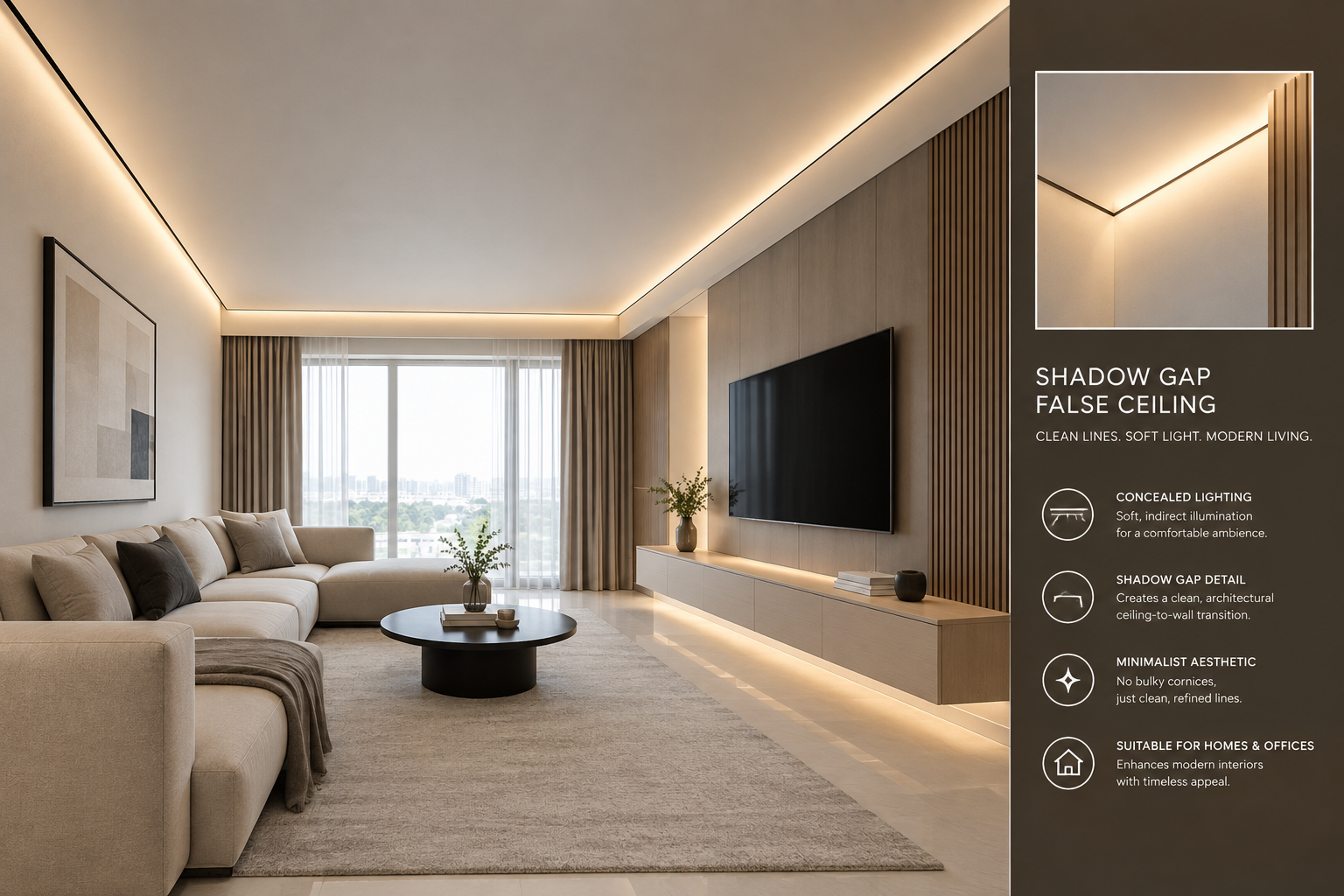
Ultra Thin Edge Covelight is part of our Dustless Covelight Series. You can also compare Shadow Gap Covelight and Single & Double Eyelid Covelight to find the ceiling detail you prefer.
Key Features & Architectural Benefits


1. A 23° Sloped Profile
The profile uses a 23° sloped detail as an alternative to the flat ledge found in conventional open coves. This reduces the horizontal surface available for dust to settle on, while creating a defined edge for indirect lighting.
Exposed surfaces can still collect dust and require occasional cleaning. Cleaning access and the recommended method should be confirmed for the finished ceiling arrangement.
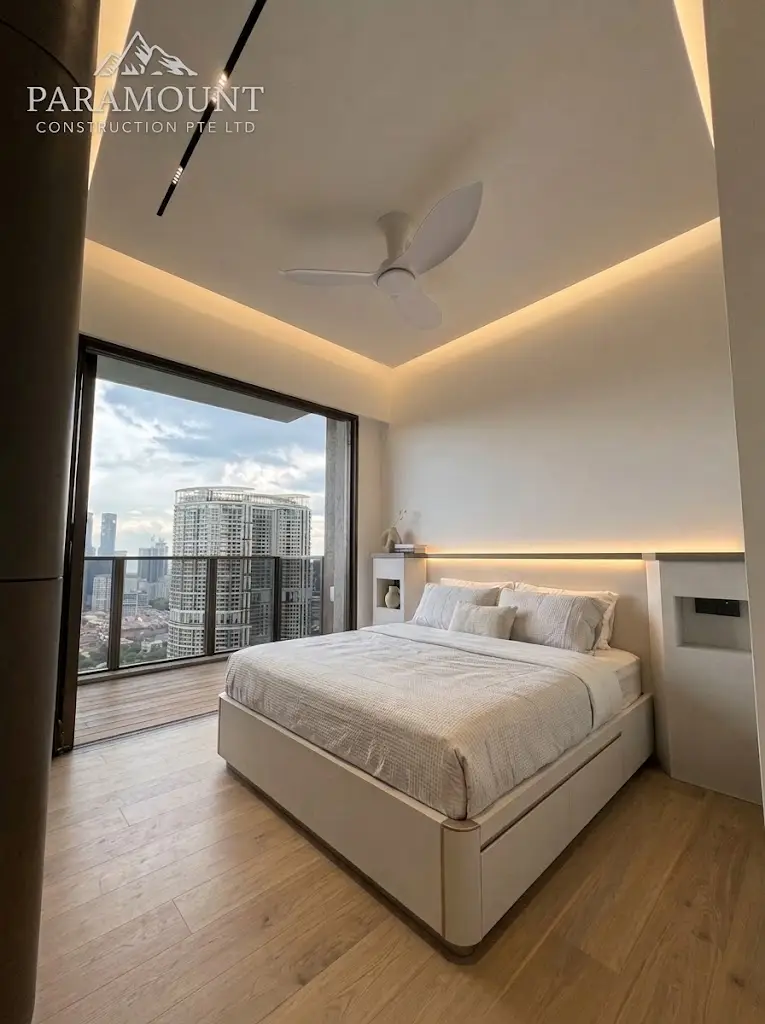
2. A Fine 1mm Ceiling Edge
The profile’s 1mm edge creates a subtle outline where it meets the surrounding plasterboard. This suits interiors where the ceiling detail should remain understated and the reflected lighting should be the main visual feature.
The 1mm measurement refers to the profile edge, not the overall ceiling drop or installation space. Those dimensions depend on the complete ceiling design.

3. Integrated Aluminium Profile
The aluminium profile integrates with the plasterboard detail and provides a defined mounting position for the LED strip. Careful alignment, joint treatment and finishing help create a consistent ceiling edge, including at corners and where profile lengths meet.
Aluminium can help conduct heat away from a correctly fitted LED strip. Lighting performance and service life also depend on the LED strip, driver, thermal contact and installation conditions. Access for inspection and replacement should be planned before the ceiling is finished.

Practical Considerations Before Installation
Heat management: The aluminium profile can help conduct heat away from a correctly fitted LED strip. Performance also depends on component selection and installation conditions.
Maintenance access: Confirm how the LED strip and driver can be inspected and replaced.
Cleaning: Exposed surfaces may still require occasional cleaning. Ask about a suitable cleaning method for the finished detail.
Ceiling space: Confirm the dimensions of the complete installation rather than judging the required space from a reference photograph.
Electrical installation: If your project includes new wiring or changes to lighting points, the work should be carried out or supervised by a Licensed Electrical Worker. Read EMA’s guidance on engaging licensed electrical workers when planning your installation.

Frequently Asked Questions (FAQ)
Can it be fitted to an existing false ceiling?
Some existing ceilings may be suitable for modification. We need to assess the structure, available space, wiring and finishing work before confirming the scope.
Can it be used in humid areas?
Suitability depends on the complete lighting system and its intended location. The profile finish, LED strip, diffuser, driver and installation conditions should be assessed together.
Which LED strips and controls can be used?
Compatibility depends on the profile dimensions, LED strip, driver and control system. Confirm the proposed combination before purchasing components, especially if you want dimming, colour adjustment or smart-home control.
Upgrade Your False Ceiling with Paramount Construction